Applied Environmental Science focuses at the intersection of technology and environmental science, showcasing advancements in artificial intelligence, biotechnology, and remote sensing for ecological monitoring and resource optimization.
It addresses pressing issues, including the decarbonization of high-impact sectors, the management of the water-energy-food ecosystem (the WEF Nexus), and ethical frameworks for geoengineering.
At a glance
2,100+
organizations covered
3,500,000+
items from 1995 to today and continually growing
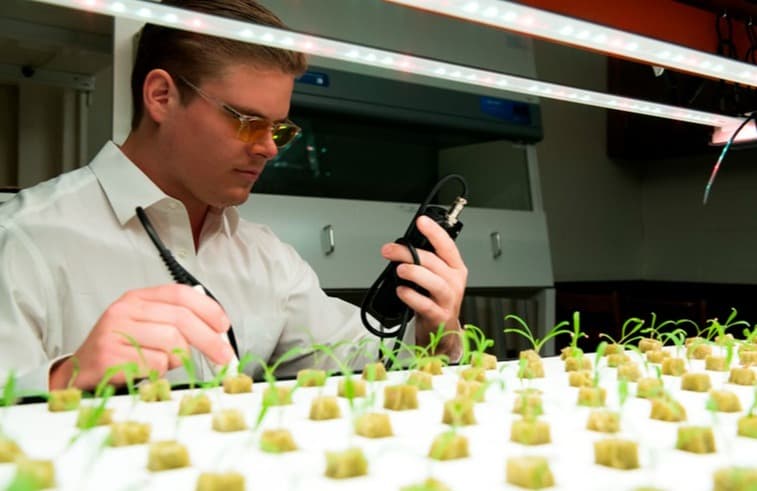
MS horticulture student screens spinach germplasm for disease resistance in a vertical farm system (University of Arizona System, Division of Agriculture, photo by Fred Miller)
Social dimensions in environmental science
In addition to scientific and technological innovations, the collection explores environmental justice, indigenous knowledge integration, and the social dimensions of climate adaptation. It features resources on regenerative agriculture, ocean-based solutions, and the health-environment interface, equipping users to tackle complex ecological challenges.
Key topics
Climate change and resilience: Mitigation, adaptation, disaster risk reduction, and climate-resilient infrastructure
Carbon management: Negative emissions technologies, carbon sequestration, and blue carbon ecosystems
Sustainable energy: Renewable energy, energy efficiency, and decarbonization of heavy industries
Circular bioeconomy: Biomaterials, bioenergy, sustainable waste management, and circular economies
Pollution control: Air and water pollution, microplastics, emerging contaminants, and remediation technologies
Biodiversity and conservation: Ecosystem restoration, wildlife management, and environmental DNA applications
Water-Energy-Food (WEF) Nexus: Sustainable agriculture, water recycling, desalination, and food security innovations
Urban sustainability: Smart cities, urban farming, vertical agriculture, and green infrastructure
Environmental technologies: AI, remote sensing, GIS, blockchain, and environmental monitoring innovations
Ocean-based solutions: Marine conservation, renewable ocean energy, and sustainable fisheries
Environmental health and One Health: Links between environmental change, public health, and zoonotic diseases
Geoengineering: Solar radiation management and ethical considerations of large-scale interventions
Environmental justice: Equity in sustainability, indigenous knowledge, and community empowerment
Regenerative practices: Soil health, agroforestry, and ecosystem-based agriculture
Policy and governance: Climate migration, environmental laws, green finance, and international agreements
Synthetic biology and biotechnology: Engineered microbes for pollution cleanup and biosynthetic sustainable materials
Digital environmental science: Predictive modeling, drones, and AI-driven decision-making
Social dimensions: Behavioral change, public engagement, and sustainability education

Try it with your institution
Free, 30-day institutional trial, with onboarding and training included
Pricing options based on your institution's size—contact us for a tailored quote
Collection packages are available for institutions subscribing to multiple Commons—ask your sales representative about options


Collaborate on coverage